




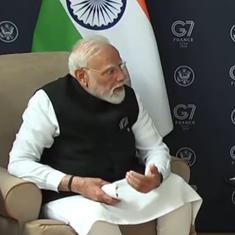

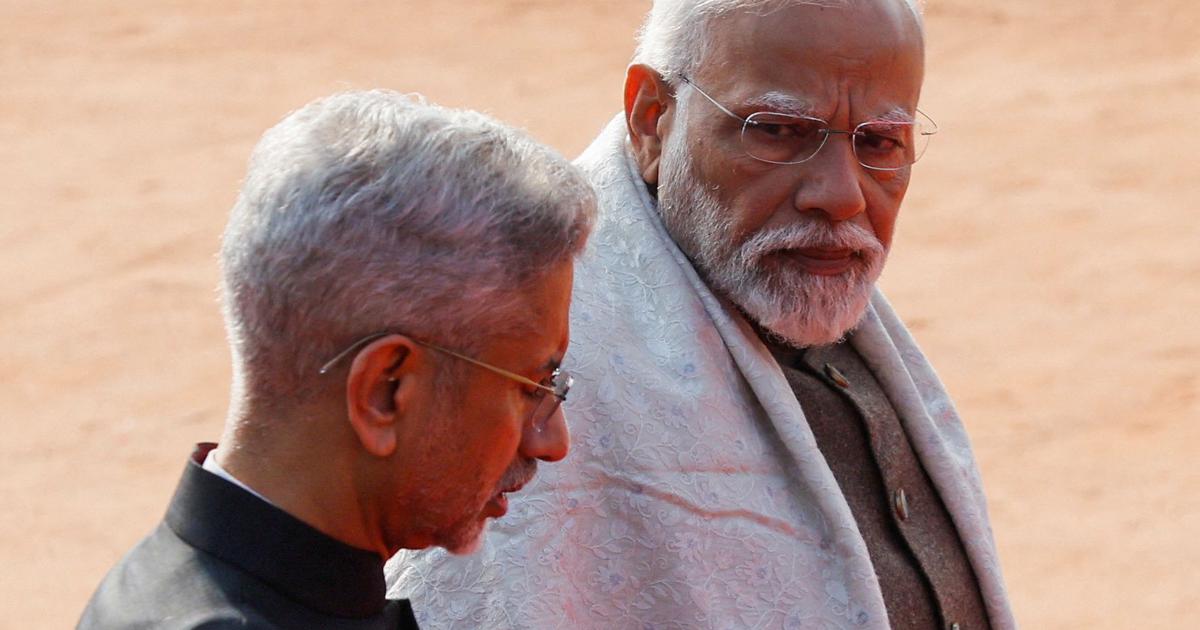
Most Indian prime ministers since Jawaharlal Nehru have taken a special interest in foreign affairs and thus the Prime Minister’s Office (PMO) has become an important nodal point for foreign policy. An IFS joint secretary is permanently posted in the PMO, and senior superannuated officials are on hand for the prime minister to consult with. Thus, with the foreign policy being PMO-driven and the PM travelling extensively across the globe to push the Indian point of view, it makes sense to strengthen the IFS (even if incrementally). However, that also means that the MEA has to spare extra hands as well as fortify resources in the ministry to support the efforts of the PMO. Additionally, this means that the EAM can play a diminished and truncated role, as with the incumbent minister S Jaishankar, who has arguably been reduced to a glorified spokesperson touting hawkish stands that needlessly ruffle feathers and show India in a poor light.
Another problem that has cropped up is the evolution of the office of the national security adviser (NSA), often occupied by a former senior IFS official but periodically by an Intelligence Bureau official, as under the present PM. The evolution of this post, while a welcome development, poses a challenge for the foreign service. Although policy formulation in the MEA inevitably relies on important intelligence inputs shared by the IB, RAW and military intelligence, it is quite another matter to follow the lead of a hard intelligence assessment from the NSA.
There is not enough data analysis to take a considered view on the relationship beyond the instinctive impressions that people in the NSA pose. In due course, particularly in light of the experience of other countries like the US, we might be better equipped to deal with the interface. In parallel, there will be somewhat similar attempts to absorb the contribution of the chief of defence staff (CDS), another important post added to the military hierarchy. It is possible that the personal equation between the incumbent external affairs minister, the NSA and former CDS might make it easier to work in tandem. But it leaves the foreign secretary (FS) as an appendage. This is problematic given that the conventional wisdom of the IFS experience needs to be marshalled to vast advantage in collaboration and cooperation with the remaining trio. It also does a disservice because it undermines the authority of the FS, and the ranks below that report to him.
If India is to remain a significant power pole in today’s multipolar world, our foreign policy needs to be principled, have coherence and a futuristic vision. This vision needs to have bipartisan support, whose torchbearers will naturally be India’s prime minister and foreign minister. The forging of that consensus is incumbent on the personal initiative of the PM, who needs to systematically have conversations with all domestic parties, including Opposition parties.
The IFS is the ideal venue to do this, as has been done in the past. The leadership of all parties used to be briefed confidentially by the PM, the EAM and the FS on all important foreign policy issues that concerned India. This was an essential convention that was followed by PM Atal Bihari Vajpayee and Manmohan Singh, but sadly assigned to the dustbin of history by the BJP government. Not only are closed-door briefings not conducted, even Parliament (the temple which houses the peoples’ representatives) is not briefed. This is not in the national interest.
Furthermore, foreign policy must be conducted with gravitas, and not in a personalised manner. Sadly, the BJP government has made it excessively partisan (stumping with the diaspora on domestic political issues) and personalised. India’s neutrality and standing has been further compromised in various capitals because the prime minister myopically decided to campaign (and thus interfere) in the electoral process of another nation. This goes against every principle of foreign policy, and I am certain this went against the advice of India’s foreign policy establishment. Foreign policy simply has to be conducted on the basis of experienced advice from the IFS, and exclusively in the national interest. This necessitates checks and balances on the discretionary power of the PMO, which could partly be redressed by appointing a strong EAM with a political base of his/her own, and who has a deep appreciation of the principles of foreign policy.
Taking this further, the IFS and especially the FS will also need to be much more assertive on other issues to protect India’s global image. Cracking down on the functioning of international organisations, think tanks and charity institutions within India only sour our relations with other nations. They also tar our image as a mature and liberal democracy. Unfortunately, the BJP government has become so hypersensitive to any accountability or transparency, that any organisation and stakeholder that is deemed to be anti-BJP is caricatured as anti-national.
No less than the NSA went on record to say that civil society is the new frontier of warfare! This severely compromises India’s stature on the global stage. While nations will continue to engage and collaborate with India (largely because of the work done in the last seventy years which has made us an inevitable economic, cultural and geopolitical powerhouse), privately leaders look at our leadership distastefully (and not with reverence or love, as they did with prime ministers Nehru, Lal Bahadur Shastri, Indira Gandhi, Rajiv Gandhi, Narasimha Rao, IK Gujral, Atal Bihari Vajpayee and Manmohan Singh).
Manufactured photo-ops and solicited praise (from cheat sheets to foreign leaders) may temporarily gloss over the damage being wrought on foreign policy but will not deepen ties between nations. Ultimately, all leaders need to realise that we are all but temporary actors on a stage. True statesmen will leave behind a strong and vibrant legacy that will positively and constructively further relationships between nations.
Each of the aforementioned prime ministers and their respective EAMs and foreign secretaries has done this, and they are therefore statesmen who will be hailed through the ages. Petty leaders driven by myopic self-interests will leave behind a legacy that frays ties between nations, because their body of work was based on an unstructured and partisan vision.
Another major fault line that has cropped up in the past few years: India’s foreign policy establishment is being actively undermined by the BJP government. On the one hand, India’s diplomatic posts are being forced to actively interfere in the internal affairs of other nations, as with the communal tensions in the United Kingdom and Canada in 2022. This was never done earlier and is frowned upon by all nations. On the other hand, the BJP government is methodically bypassing the foreign service establishment by relying on ideologically aligned think tanks and non-official diaspora stakeholders, as well as the Rashtriya Swayamsevak Sangh’s (RSS) foreign wing (the Hindu Swayamsevak Sangh—HSS) to pursue large events, seminars, socio-cultural programmes, etc.
Some of these are positioned in the ICCRs, to provide them with greater legitimacy. On the face of it, this just diminishes the foreign policy establishment’s capabilities. But even more insidiously, this is also creating a parallel foreign policy architecture that is exclusively aligned to the BJP. This will inevitably become a problem in the future, when non-BJP governments will be undercut by this parallel setup and India’s domestic political issues will be transported to other nations. This is not in the national interest.
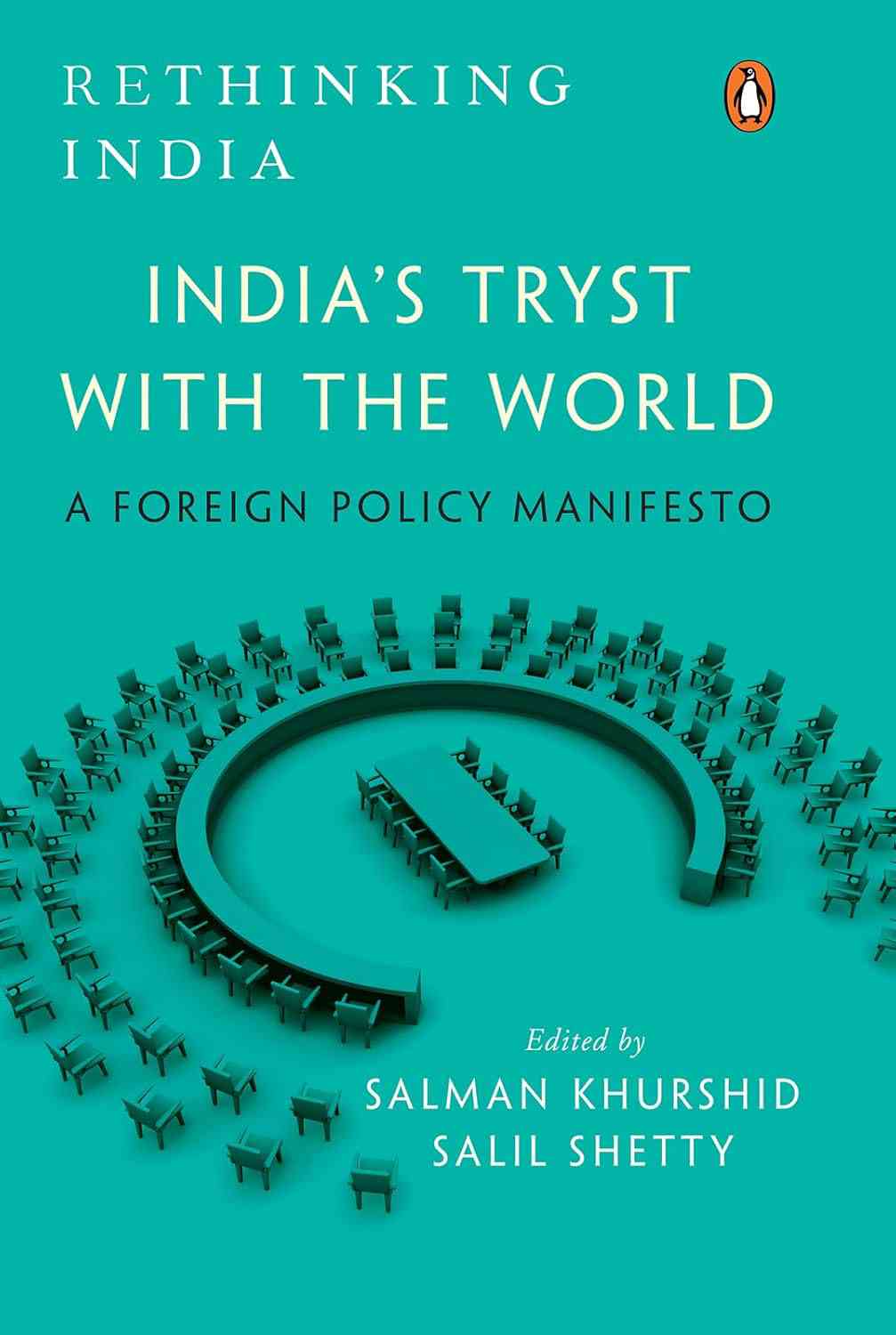
Excerpted with permission from ‘The Future of India’s Foreign Policy Establishment’ by Salman Khurshi in India’s Tryst with the World: A Foreign Policy Manifesto, edited by Salil Shetty and Salman Khurshid, Penguin India.
